Coaching supervision
A reflective space to restore, deepen your practice, and reconnect with what matters most.
Supervision is so much more than a place to review your client work. It is a space to reflect, restore, deepen your practice, and realign with the values that matter most to you as a coach.
Using my WayPower approach, I offer supervision that honours both your professional development, your humanity and your nervous system. Together, we explore what is happening in your coaching relationships, what is being stirred in you, and how you can keep showing up in ways that are ethical, grounded, resilient and true to who you are.
I work especially with highly sensitive, Autistic and ADHD coaches, with coaches who support many neurodivergent clients or those exploring their own neurodivergence.

Supervision that restores first, then stretches
I believe supervision should be a space where coaches can first restore themselves and only then, stretch and deepen their practice.
That philosophy sits at the heart of how I work and reflects my belief that real development does not happen through pressure, performance or pushing through, but through safeness, reflection, increasing awareness and supported growth.
Whether you are newly qualified, still finding your voice, or further along in your coaching career, supervision with me offers space to think, feel, notice patterns, explore ethical questions and deepen your trust in your own way of working.
What is WayPower supervision
WayPower is my antidote to willpower-led practice. It is a way of working that moves away from forcing, masking, over-preparing and trying to do everything by the book. Instead, you’ll move towards a more humane, attuned and sustainable way of being in your work.
In supervision, that means we don’t only focus on your competences and skills as a coach. We pay attention to your values, your nervous system, your lived experience, your capacity, your intuition and the wider systems both you and your clients are navigating.
This can make a profound difference if you’re a coach who’s learned to survive by over-preparing, over-functioning, and over-riding your own body’s signals. I offer supervision where we’ll notice those patterns with warmth and compassion, and together find a more embodied, easeful way forward, that works for your clients, and your life.
As a Focusing practitioner, I offer supervision that includes your body, senses and felt experience in the conversation, not just your thoughts and stories.
Rather than staying only at the level of what happened with a client, we’ll slow down enough to notice what is emerging in you as you speak: the subtle felt sense, the sensations, the not-yet-clear knowing that may be trying to come into awareness.
We may notice your breathing, posture, areas of ease or constriction, emotional shifts, impulses, images or the relational field between us.
This is not about analysing you. It is about including more of the knowing that is just on the edge of your awareness, so that supervision becomes a deeper, more meaningful and honest space.
Focusing-oriented supervision: a somatic approach
What difference would supervision make?
Focusing-oriented, WayPower-informed supervision with me can support you to:
Trust your own embodied knowing instead of overriding it.
Recognise ethical discomfort and use it as information, rather than talking yourself out of it.
Develop a grounded self-confidence in your own coaching philosophy, values and professional judgement.
Supervision shifts from competencies and to making the implicit – what’s just under the surface - explicit in a warm, psychologically safe space.
Supervisees often tell me they have reconnected with their love of coaching – that original spark of joy and meaning that drew them to this work in the first place. In the early days, setting up a business can feel like a slog, and when you begin working with real, paying clients (rather than fellow trainees or willing volunteers), the work can understandably feel heavier and more exposing.
Supervision offers a place to process
that weight, make sense of what’s happening, and rediscover the energy, purpose and hope that sit underneath it.
Notice patterns such as masking, rescuing, over-explaining, perfectionism or over-functioning as they arise in your work.
Stay with uncertainty, complexity and paradox without rushing to rescue, perform or prove.
Work in ways that honour your sensitive nervous and sensory systems.
What we might explore
Supervision with me is a may be a particularly good fit if you’re
A highly sensitive, Autistic, ADHD, AuDHD or otherwise neurodivergent coach.
A coach who wants a slower, more embodied and reflective space.
An emerging coach who is building confidence and finding your own style.
A practitioner navigating perfectionism, burnout, shame or the pressure to do it right.
A coach who wants to build a successful business in a heart-centred way that honours their need for honesty and nervous system safety.
A coach who wants a somatic and creative way to explore ethics, self-trust, boundaries, self-disclosure and the emotional impact of the work.
Someone drawn to relational, somatic, intuitive or spiritually informed practice.
My approach
My supervision is:
Neuro-affirming:
I explicitly include the impacts of masking, shame, internalised ableism and systems not designed for our bodies and minds
Relational and gently challenging:
warm, spacious and compassionate, to enable the vulnerability and courage to notice patterns and grow.
Focusing-oriented and embodied:
drawing on the felt sense, body awareness and the relational field alongside reflective dialogue.
Grounded in self-as-instrument:
Grounded in self-as-instrument: valuing both of own experiencing in the supervision space as part of the information of the field.
Restorative and developmental:
offering both resourcing and deepening, with attention to your growth, confidence and ethical practice
Curious and creative:
arts-based supervision and other creative practices invite insights from our unconscious which can often short-cut our cognitive processes.
About Kaye
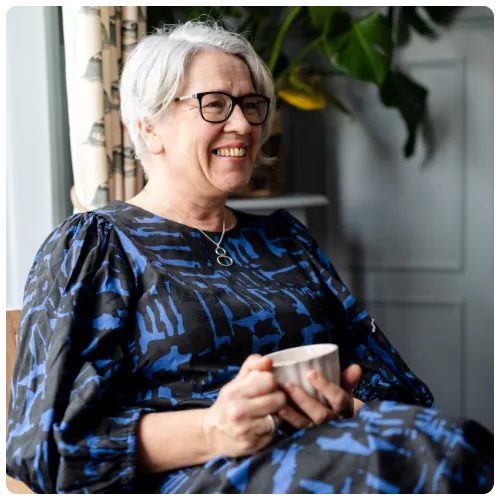
I am an AuDHD coach, supervisor, hypnosis practitioner, positive psychology practitioner and Focusing practitioner with a neuro-affirming, strengths-based and embodied approach.
My work is shaped by lived experience of late-diagnosed neurodivergence, chronic health conditions, positive psychology, nervous system awareness, Focusing and a deep belief in the power of being compassionately witnessed.
I am particularly interested in what happens in supervision when we attend to what is emerging beyond words: in the body, in the felt sense and in the relational field.
My supervision approach has been shaped by Focusing, Hawkins and Shohet’s Seven-Eyed Model, and Robin Shohet’s idea of supervision as a space where people can hear themselves afresh and imagine new ways of proceeding.
Ways to work with me
1:1 Supervision
Using a somatic practice called “Focusing” I offer 1:1 coaching supervision for coaches who want a reflective, restorative and developmental space for their practice.
This is time that is just for you and your work: to pause, think, feel, and be alongside someone who understands both the emotional and practical realities of coaching.
Read more
Professional bodies such as the EMCC, ICF and AC all recognise the importance of supervision in supporting ethical, effective and sustainable practice. Rather than seeing this as a tick-box requirement, however, I invite you to think about what kind of supervision relationship would genuinely support you and your clients.
Most of my 1:1 supervisees meet with me for an hour once a month or every six weeks, depending on their client load and what feels resourcing. If you are working towards EMCC accreditation, there are minimum supervision guidelines (for example, at least four hours per year, and at least one hour for every 35 client hours), but these are best thought of as a floor rather than a ceiling.
For me, the focus is less on how many hours you log and more on the quality of reflection, safety and honesty that can happen in the supervision space.
Together, we can agree the type, duration and frequency of supervision that will help you feel fully supported in your professional practice.
If you’d like to explore whether 1:1 supervision with me is a good fit, you’re welcome to book a free conversation to find out more.to untangle what feels messy, heavy or enmeshed
Group supervision
I offer both closed and drop-in group coaching supervision groups every month, which offers more affordable support as you’re building up your coaching practice.
These are two-hour sessions with a maximum of four practitioners, giving you enough space to be fully heard while also learning from others’ real cases.
Read more
These groups are designed to be restorative and developmental: a place to explore client work, parallel process, ethics, nervous system capacity and patterns such as over‑functioning or perfectionism, within a warm, neuro‑affirming space.
My closed groups journey together over time with the same members for six months at a time, allowing a deep trust and shared language to build, and a supportive community which supports you in between meetings.
My open drop-in groups allow more flexibility if you prefer to have occasional support.
If you’d like to be the first to hear when a new group next opens, you’re welcome to join the waitlist.
Frequently asked questions
Do I need to be an experienced coach to work with you?
No. I welcome both emerging and experienced coaches. If you are still finding your voice or working out how you want to practise, supervision can be an especially valuable space to explore and discovery your own coaching philosophy.
Do you only work with neurodivergent coaches?
No I don’t. My lived experience and expertise means that most of my coaching and supervision clients who choose to work with me also identity as neurodivergent and/or highly sensitive and/or living with chronic health conditions.
Because this lens strongly shapes how I work, supervision with me might also be a good fit if you have clients who are neurodivergent, have chronic health conditions or identify as highly sensitive.
Similarly, if you are looking for an embodied, creative and more spiritual way of working, especially if you’re looking to avoid compassion fatigue or burnout, my WayPower supervision might resonate with you.
If you’re curious, you can book a discovery call to explore what it might be like to work with me.
What makes your supervision different?
My approach combines reflective supervision with WayPower, Focusing, body awareness and a neuro-affirming lens. I am interested not only in what happened in your coaching, but in what is happening in you, between us, and in the wider systems around the work.
This means we can start to notice your defence patterns over time, and work with your more tender parts, when a client’s “stuff” touches your “stuff”.
Can supervision help if I feel overwhelmed or burnt out?
Yes, absolutely. Supervision with me is a restorative space where your own capacity, needs and nervous system are the foundation of the conversation, not something to hide or be ashamed of.
I developed my concept of WayPower after recognising that my willpower-way of working led to repeated overwhelm and burnout cycles. WayPower offers you a sustainable, joyful way of looking after yourself, whilst supporting clients, and growing your business.
WayPower Supervision
A slower, more attuned and deeply human space for your coaching practice
If you are looking for supervision that supports both your professional development and your humanity, I would love to welcome you.
Supervision with me is a space to restore, reflect, notice what matters, and grow a practice that feels more ethical, sustainable and truly your own.
Book a supervision conversation →
EXPLORE
RESOURCES
SUPPORT
CONNECT
Why WayPower?
I set up Positively ADHD because I believe in a different way forward.
People with ADHD have so many gifts and incredible ways of thinking which can make a huge contribution to the world. Yet so much nuance is lost in the deficit-based, medical model which sees ADHD as a list of “symptoms” that need to be “treated”.
Many of us who were late-diagnosed or have self-diagnosed, have spent our whole lives in survival mode, because we did not know that our brains and nervous systems were different. We may have spent many years believing we were broken and have probably struggled with periods of depression, anxiety and burnout.
Whilst I don’t underestimate the difficulties that ADHD can cause, I also know that when we feel creative, hopeful, and connected to our purpose, anything is possible for us and our amazing minds.